Category: compassion

  • walking each other home

    walking each other home

    In meditation, we patiently cultivate two qualities of the heart that are so comforting and life-changing, some call them “refuges.”

    Now, while loving-kindness and compassion might sound like these grand ideas, they’re actually really practical meditation practices. When you put in the effort, they truly transform your heart.

    Think of it as a master gardener bringing dead soil back to life. 

    These practices can do the same for parts of yourself you’ve neglected.

    In a garden, you set up all the right conditions for things to grow – rich soil, enough sun, regular weeding. All these things work together. But you don’t make a sweet potato grow. 

    When the conditions are right, it just grows on its own. We do the same thing with our hearts: we create the right inner conditions for good qualities to bloom.

    And yep, we’re talking about loving-kindness and compassion.

    These qualities are already in us, though maybe a bit hidden by past choices that weren’t so skillful. Our practice helps us see where suffering is popping up everywhere.

    Here’s the cool part: when you gently tend your heart like a garden, pulling out the ‘weeds’ of fear, disappointment, and confusion, a deep tenderness starts to show up.

    Loving-kindness meditation isn’t about being sappy or pretending to like everyone.

    As the Buddhist teacher and psychologist Tara Brach says,

    It’s not about turning somebody we don’t like into somebody we do like – or pretending to like everybody.

    This practice gives you more inner space, making you friendlier to yourself and others as you quietly repeat phrases like:

    May all beings be well, happy, and peaceful.

    Compassion practice helps us see when others are struggling, and from that awareness, we genuinely wish for their suffering to end.

    There’s no direct word for ‘meditation’ in the ancient language the Buddha spoke. Instead of just telling monks to meditate, the Buddha always talked about ‘bhavana’ – which means ‘cultivation.’

    And it’s clear the Buddha was saying that spiritual development is not so much about attaining any rarified states of consciousness, but rather it’s more about cultivating what he called “wholesome” states of mind. 

    And yes, we’re talking about loving-kindness and compassion.

    Since these qualities are already inside us, practicing loving-kindness is like tilling the soil before planting seeds. It breaks up hard spots and brings up richer, deeper parts of yourself.

    When everything’s just right, things flourish. 

    But does a garden stop growing when the sun sets? Nope, the night cycle is actually crucial. 

    Our inner garden keeps growing even in dark times such as these.

    When we let our hearts feel vulnerable during really tough periods, a new kind of sensitivity grows. We become so tender. Unhappiness can actually be a great tenderizer for the heart. 

    Our practice is to stay with this “quivering of the heart,” as it’s called.

    And in that genuine sadness, there’s a deep love. As we move through layers of fear and denial, we start to see that at the core of heartbreak is love. 

    Our whole practice can be about learning to uncover and rest in this kind of love.

    As we get comfortable with our own vulnerable hearts, we naturally connect with others whose hearts are breaking or who are feeling loss.

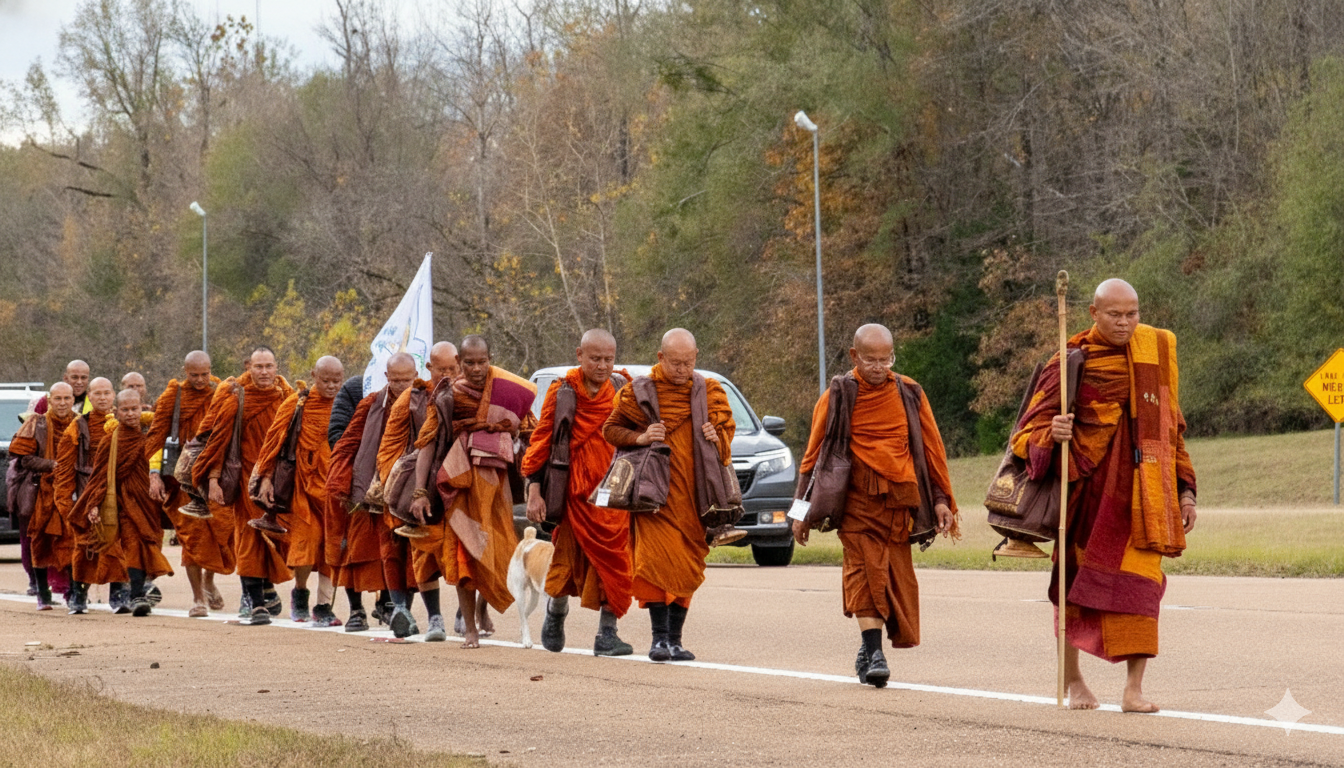
    Ultimately, this practice helps us move through life with a light step. And in a beautiful way, it helps us carry others lightly in our hearts. It’s like we’re all walking this path together.

    As Ram Dass often said: “we’re all just walking each other home.”


  • Compassion in Buddhism: Why does Kuan Yin have so many hands? 

    Compassion in Buddhism: Why does Kuan Yin have so many hands? 

    Kuan Yin is an archetype of compassion in Buddhism. Sometimes portrayed as female, or male, or androgynously, they manifest the impulse to help suffering beings.

    In his celebrated Four Quartets, T. S. Eliot observed:

    Human kind cannot bear very much reality.

    Reality is a lot to take sometimes. One teacher says this practice builds our “reality tolerance.”

    Ours is a sobering practice

    The bare bones of it is to appreciate the “three inconvenient truths”, as the American nun Pema Chodron calls the “three marks of existence” the Buddha taught are intrinsic to reality: impermanence, stress, and interconnectedness.

    It’s inconvenient for us that everything changes.

    For example, just when I’m feeling settled as I sit to meditate, there’s this pain, or that song going through my head and ricocheting off my inner cranium walls, telling me I have been overdoing it with Spotify.

    Deep down we much prefer convenience

    From a Buddhist perspective, the habit energies called delusion come along to satisfy our preference for convenience, controlling the internal narrative, spinning reality in a distorted way, supporting our insupportable preferences for stability and constancy.

    Mostly, we fall for this over and over, until we grasp that our practice is about seeing these delusive habit energies arise in the mind in their many guises and to work through them.

    A milestone in practce …

    is seeing how our conditioned patterns distort our perceptions of reality in real time.

    This practice is sobering because we get intimate with our personal experience of stress and frustration- one of the three aspects of reality the Buddha called dukkha.

    If we don’t clearly see the mechanisms of our own stress and frustration, it’s hard to be happy. 

    When we see this clearly, there is such a relief.

    In the Pali language of early Buddhism, the meditation we practice is called vipassana. “Passana” means to see, and the prefix vi means “in a particular way.”

    As we adapt to regular sitting practice, there’s a deepening sense of calm and inner composure, which helps us see things more clearly.

    A calmer mind is less inclined to fall for the delusive habit energies of desire, aversion or agitation. We can see our stuff more clearly, our hidden motivation and agendas, for example.

    Tranquility allows a healing to happen, a gathering together of all our broken parts, the unfinished business, the parts we have disowned.

    But the practice doesn’t end here, it’s just getting started.

    Kuan Yin: archetype of compassion in Buddhism
    Kuan Yin: archetype of compassion in Buddhism

    We notice that just as we have work to do, so does everyone else.

    We realize we’re all in this mess together. Even when we do not know what to do next, we feel we should at least try to be kind.

    The late Zen master Bernie Glassman tells us “I define realization as the depth to which one sees the interconnectedness of life.”

    Then he adds a corollary, which emphasizes compassion in Buddhism:

    And the degree of your enlightenment can be measured by your actions.

    Here is a Zen koan- a kind of teaching story- from ancient Zen lore about compassion in Buddhism as the the fruit of our sobering practice, of living our interconnected-ness.

    How Does Kuan Yin Use Those Many Hands & Eyes

    Yunyan asks the more realized monk Daowu:
    “Why is it that the Bodhisattva Guanyin has so many hands and eyes?”
    Daowu responds, “It is like someone sleeping, in the night, reaching behind her head for her pillow.”
    To these words Yunyan said, “I understand.”
    When asked what precisely was his understanding he answered, “Our bodies are covered with eyes and hands.”
    Daowu replied, “Almost. You’re eight tenths of the way.”
    Then, when asked what is the more complete response, was told,
    “There are only eyes and hands.”

    This conversation between two monks is preserved in the twelfth century anthology of Zen stories called the Blue Cliff Record. Both monks, Yunyan and Daowu, were students of the same teacher and would themselves each become famous teachers.

    They both deeply realized this interconnectedness. Daowu, it seems, had a deeper understanding than the younger monk Yunyan, who asked why the bodhisattva Kwan Yin has so many hands and eyes.

    In my mind, Yunyan was really asking “What’s the deal with this deity we all talk so much about, who has a thousand hands and a thousand eyes? What’s up with that?”

    Kwan Yin is an archetype of compassion in Buddhism.

    Sometimes portrayed as a man, sometimes as a woman, and sometimes androgynously, Kwan Yin manifests the altruistic impulse to reach out and help suffering beings.

    Daowu says this altruistic impulse comes deeply from the heart without a second thought- like someone turning in her sleep and reaching a hand behind her head to adjust her pillow. 

    He says this natural impulse of compassion in Buddhism is like having eyes and hands all over our body. True, true, says his companion Yunyan. But he adds- that’s only 80% of the answer. 

    The full answer, he says, is realizing “There are only eyes and hands.” I appreciate the writer James Ishmael Ford take on the full answer here:

    Just this. Ends and means, one thing; our interdependence and you and I, one thing.

  • basic human sanity

    basic human sanity

    We breathe, and open our hearts no matter how difficult it feels, bringing some peace to our minds as we ask what is compassion?

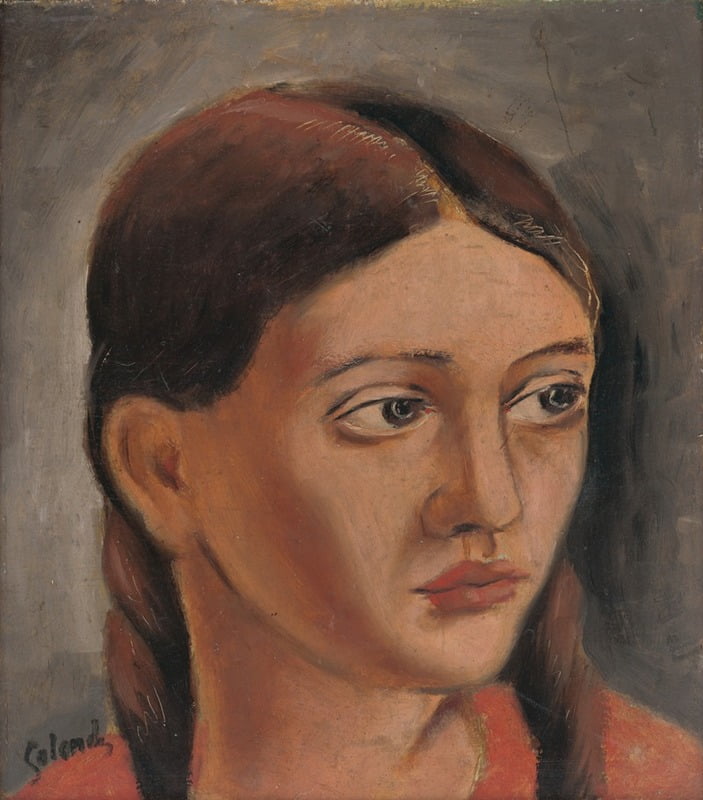
    The ongoing events in Gaza are hard to take in. I am sorry to bring this up, but I can’t shake these feelings. If I could draw a picture of my inner being, it would look like the young woman’s face in Mikuláš Galanda’s work above.

    Yes, mindfulness reveals a certain truth power to just sitting with your emotions, thoughts and feelings as they are, without interfering or trying to change or fix anything.

    Yes, allowing what is there to arise in this way brings peace, even though it may not feel particularly peaceful.

    And yes, I can re-direct myself to settle more easily into the feeling-space those times when I feel my heart turning to stone, out of numbness.

    But what is compassion here? What does it look like?

    It’s still hard to practice with confused and difficult feelings.

    How do we do this?

    For a start, we practice letting thinking be. I can’t stop myself from feeling upset. I have fearful, sometimes angry thoughts, and I can’t do anything to stop them.

    But when we sit with awareness of our body sitting and breathing, we tap into a basic human sanity that is freely available to all of us.

    We create an inner space for all the thoughts and emotions, anger, fear, all of it, to arise- and simply notice the conditioning to interfere, to meddle, to push away, to zone out or to cling.

    As Pema Chrodon observes,

    When you open yourself to the continually changing, impermanent, dynamic nature of your own being and of reality, you increase your capacity to love and care about other people and your capacity to not be afraid.

    Little by little, we learn what it is like to allow everything we think and feel to arise within us without being caught by them or identifying with them.

    This is not another way to deny or escape our feelings, on the contarary.

    When we do this, as the Zen teacher Norman Fischer often says,

    we forgive ourselves for being human. And when we do that, he says, we forgive everyone else for being human, too.

    Suffering Opens The Real Path

    What is compassion

    If we sit long enough, we get in touch with profound human pain and the compassion to meet that pain. Wth practice, over the years, this compassion becomes the center of our lives, little by little.

    We breathe, and open our hearts no matter how difficult it feels, bringing some peace to our minds and compassion deeper into our hearts.

  • what if I don’t feel compassion?

    what if I don’t feel compassion?

    When you don’t feel compassion as you scroll through the daily newsfeed horror show- just be aware of not feeling particularly compassionate.

    I have received emails from readers asking whether we can cultivate a mature mindfulness practice and not feel particularly compassionate, especially regarding the state of the world.

    The horrors reported on media channels we tune into leave me exhausted, someone writes. 

    I can’t seem to brace myself to accept, or even try to understand, much of what is happening,

    writes another.

    One could argue whether compassion is an obligation in the forms of Buddhist practice we find today. My concern, though, is compassion seen as obligation can lead to struggle and the thoughts expressed by the readers noted above.

    Many of us carry some early conditioning around religion, e.g., to enter the Kingdom we must be pious, kind, compassionate, etc.

    And when we come across an Eastern teaching implying compassion is a big deal, we automatically interpret this as something we now have to learn to do, to master.

    But what if compassion is not so much a requirement for a mature practice, but the natural welling-up of warmth towards all beings as a result of a maturing practice? 

    Compassion as a natural welling up differs from compassion as the outcome of effort.

    I admit that amid the horror show of images in my newsfeed , the thought arises at times “Shouldn’t I be feeling more compassionate here?”

    What is I don't feel compassion? Dreamers (ca. 1850-1882) by Albert Joseph Moore; Birmingham Museum and Art Gallery.
    What is I don’t feel compassion? Dreamers (ca. 1850) by Albert Joseph Moore

    But what if I notice that thought as just another in a long line of thoughts based on should vs should not, and realize I’d be better off by not shoulding myself

    Let’s back up and unpack this. 

    1. I was scrolling through a newsfeed and saw pictures of dozens of corpses strewn about a town in Libya devastated last week by a huge typhoon. 
    2. The thought arises “I really should really feel more compassionate than I seem to be feeling right now” (especially after what happened on Maui).
    3. I start thinking I’m not much of a Buddhist meditator, and I’ll never make any progress.

    Our insight meditation comes to the rescue at the third juncture above- where we convince ourselves that if we don’t feel compassion for the pain of others we have no hope of ever progressing on this path.

    Hopefully, our mindfulness kicks in and asks: Can we simply make room for whatever arises?

    This is a point I find myself coming back to again and again, from different angles and approaches, until I get this: this path is all about mindfulness.

    And living and breathing mindfulness is a lifelong practice.

    As our mindfulness practice matures, when thoughts like these arise, we don’t take the bait.

    When we think we should feel a certain way, rather than focus on the “should” and descend into self-judgment, we stay at the level of noting the should and its subtle effects on the organism, e.g., a tightness in the belly, or a subtle fear creeping in. 

    As we do this we catch a break. We step out of our conditioning for a few blessed moments.

    The secret to a mature spiritual practice? 

    Make room for, and be attentive to, whatever arises without getting entangled.

    When we don’t feel particularly compassionate as we scroll through the daily newsfeed horror show- just be aware of not feeling compassionate

    Stay with that awareness and explore its tendrils in the body and mind and notice how it changes and morphs moment by moment.

    There might come a moment when the repulsion fades, just be aware of that. If compassion wells up, be aware of that. And if it doesn’t, it’s not really your concern. 

    The contemporary Burmese teacher U Tejaniya frequently talks about this central issue. Here he is recently speaking to retreatants:

    “There’s almost a mantra in the way I teach,” Sayadaw says.

    We’re not practicing to make things happen in the mind, such as equanimity, or to make things go away, such as fear or uncertainty.

    Rather, we practice observing things as they are happening, and to understand how things are from this close observation.

    Practice As Usual

    Just stay with mindfulness- it’s your refuge. 

  • hijacked by my news feed, again

    hijacked by my news feed, again

    My news feed can incline my mind toward fear, confusion and anger. But I can also re-frame my news feed to spark compassion for the suffering of others.

    The news. OMG, how to deal with the news? The horrors in Ukraine, and the suffering of forced migration are just one of multiple national and world crises, many impacting people of color and the LGBTQ communities + disproportionately.

    And yesterday the leaked draft U.S Supreme Court majority opinion that is likely to strike down abortion rights, which may even lead to the banning of contraceptives and interracial marriage in some states.

    Hoe I feel afer my news feed--Edward Burne Jones. Original from The Birmingham Museum.
    Study for ‘The Garden Court‘ (1889)-Sir Edward Burne-Jones.

    What do I do with this anger at the obviously guileful testimony given by Gorsuch and Kavanaugh during their confirmation hearings? Feel betrayed, confused? Ignore it?“

    Feel it mindfully, but most likely get flooded again?

    The Buddha referred to dharma practice as moving “against the stream” of society. These days it’s more like we’re up against a tsunami of collective pain and confusion. It’s so easy to become flooded by this tsunami of fears and anxieties.

    guarding the doors of the senses

    I have great respect for the Buddha’s teaching on guarding the sense doors. The guidance he offers me is not to shut myself off from the world; rather, it’s not letting myself be drawn out of my centeredness while scrolling my news feed, for example.

    Guarding the sense doors is the first step in reclaiming my scattered attention.

    The Buddha gave the example of being a sentinel watching the doors of the citadel of the mind. You observe the comings and goings at the six senses, watchful for anything that can sneak in or leak out to bring about a surprise attack.

    do we install a content blocker in our mind?

    it’s not so much like having a content blocker installed in our mind. It’s more about watching for the three poisons of greed, hatred and delusion creeping into the mind on little cat feet.

    By sitting in meditation and watching the comings and goings at my six sense doors (of hearing, touching, feeling, touching, smelling and thinking) I am fully present for what’s needed in the moment.

    I’ve lost my game these past few weeks

    But over the past few months I have lost my game, being too eager to jump into my news feed unprepared. Naturally, I feel overwhelmed and exhausted.

    There’s just no way around it–I need to meditate first thing in the morning before checking my news feed!

    I admit I need a lot more grounding and centering these days.

    Our meditation is called a “practice” because it’s a way to practice meeting the fearful and confusing challenges of our times the same way I meet each breath, sound or distraction on the cushion–with gentleness and ease.

    You cant’s stop the waves of the mind, but …

    The late Swami Satchidananda, the founder of Integral Yoga, has a line, which was appropriated by Jon Kabat-Zinn.

    You can’t stop the waves, but you can learn to surf.

    Meditation is learning how to surf the waves of the mind; no matter what they seem like to us, they are simply waves–of fear, confusion, or joy, appreciation, relief.

    our meditation is a laboratory

    Meditation is also a laboratory for exploring the many paradoxes of our practice. I appreciate an important one in the words Carl Rogers used to describe his humanistic approach to psychotherapy:

    The curious paradox is that when I accept myself just as I am, then I change.

    When I find myself stuck in anger and despair, I reflect on these words. I accept I am flooded with despair. I don’t meet despair with inner aggression. But I also reflect that I need to take responsibility, nicely, for getting stuck in its tendrils.

    August Macke's Portrait of the Artist's Wife (1909) famous painting. Original from Wikimedia Commons.
    August Macke’s Portrait of the Artist’s Wife (1909).

    I can do this because I have the agency of knowing how I got into despair in the first place.

    If I give in to despair, which is easy to do–have you noticed?– I’m not really responding to life, I’m wallowing in it.

    “The terrorists are in the cockpit”, as my teacher Shinzen Young would say. My news feed has hijacked my attention again.

    The Buddha pointed out that whatever we frequently think and ponder upon will become the “inclination of our minds”.

    from wallowing to compassion

    My news feed, if I let it, can incline my mind toward fear, confusion and anger at all the crises we face. But I can also re-frame my news feed to feel compassion for the suffering of others. This compassion is really the opposite of wallowing.

    There is a path, and it is a process of discernment vs. distraction in each moment. The mature discernment of responses to each situation in our life, the Buddha taught, leads to the fading of attachment and the bliss of release.

    Carl Rogers on the good life

    I think the Buddha would have approved of Carl Rogers’ statement:

    The good life is a process, not a state of being. It is a direction, not a destination.

    Reclaiming our attention, and using it for mature discernment, is the direction the Buddha advises us to follow.

    It’s what we signed up for.

  • drink deep

    drink deep

    Meditation practice is about coming back to love and compassion, and celebrating the one who is doing it, AKA self-compassion.

    In one of Tara Brach’s online talks on self-compassion, she tells a story about the work of Dian Fossey with gorilla groups in Rwanda. Ms. Fossey was asked how her research group was able to obtain much more information on the social world of the gorillas than anyone had previously.

    “We didn’t bring guns” she replied.

    Love and compassion

    She was saying that the gorillas could sense fear, and could sense where the strange looking newcomers were coming from deep down.

    Meditation practice is a lot about coming back to love and compassion — and celebrating what we are doing, and the one who is doing it: self-compassion.

    self-judgment happens

    Of course, self-judgment happens. It’s just a matter of noticing when it first arrives, being with it a little, and then gently coming back to the breath, or sounds, or sensations.

    Self-compassion naturally arises, if only briefly.

    Writing in the online magazine Elephant Journal about the ups and downs of her mindfulness journey, Amanda Johnson reminds us:

    Love yourself for being bold enough to try. Being mindful isn’t always comfortable. Failure is not an indicator of a lack of ability—it is a reminder of where our current limitations are and an opportunity to grow.

    unhealthy relationship with imperfection

    I think a lot of the self-judgment that folks come up against when learning mindfulness is due to an unhealthy relationship with imperfection.

    One of the hardest things for me to get across as a teacher to folks just getting started, is that being mindful is not about being perfect.

    It’s not about tweaking yourself, or fixing anything. There’s no Mary or Robert 2.0 at the end of this path.

    mindfulness is simple

    Being mindful is simply hanging out in each moment as often as possible.

    It is also having self-compassion.

    Feeling a connection with those around me as much as I can while I am being mindful.

    The only mistake in any of this, is when you forget to be mindful. But then you remember – no problem.

    the only mistake is forgetting to be mindful

    Of course, mistakes happen in our lives. We forget to pay the rent or the water bill, but then we remember, and it’s done. No problem.

    The founder of Soto Zen, Dogen Zenji, purportedly stated

    My life has been one continuous mistake.

    self-compassion and true humility

    This is humility and self-compassion served piping hot in a sizzling bowl. This insight makes it easier to let go of shame, guilt, and self-judgment.

    This is an insight about not taking oneself seriously, or taking one self at all.

    Self-judgment is not a mistake, it just happens. Just notice with supreme gentleness and come back to the breath – and celebrate.

    One of my teachers, Sharon Salzberg, calls the point when you notice your mind has wandered, “the magic moment.” She says:

    It’s the moment when you have a chance to do it differently; the time when you can be gentle with yourself and simply start again.

    We learn over and over again that our lives are imperfect. The body ages. We say stupid things sometimes. Where are those keys, not again?

    Mindful of our mind states, we see pride and self-interest front and center.

    As the compulsive thinking layer of mind thins out, we begin to touch the refreshing inner springs of self-love and self-compassion.

    Drink deep.